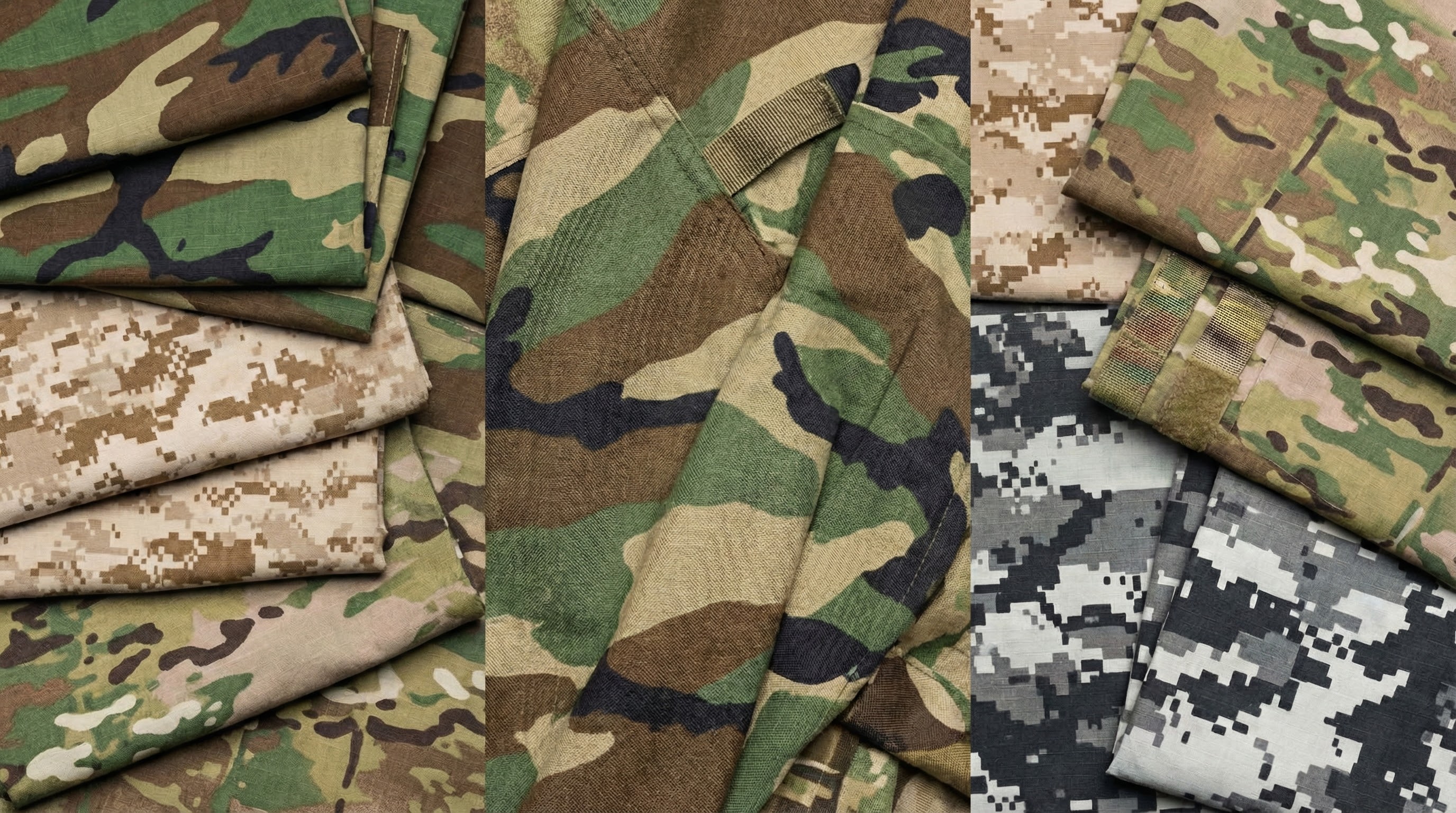
Pattern Wars
The History of US Army Camouflage
From M81 Woodland to OCP: Explore the evolution of military camouflage patterns, the $5 billion UCP failure, and why Congress forced the Army to switch to MultiCam and Scorpion W2.
Camouflage History
Timeline
Analysis
Read the full story
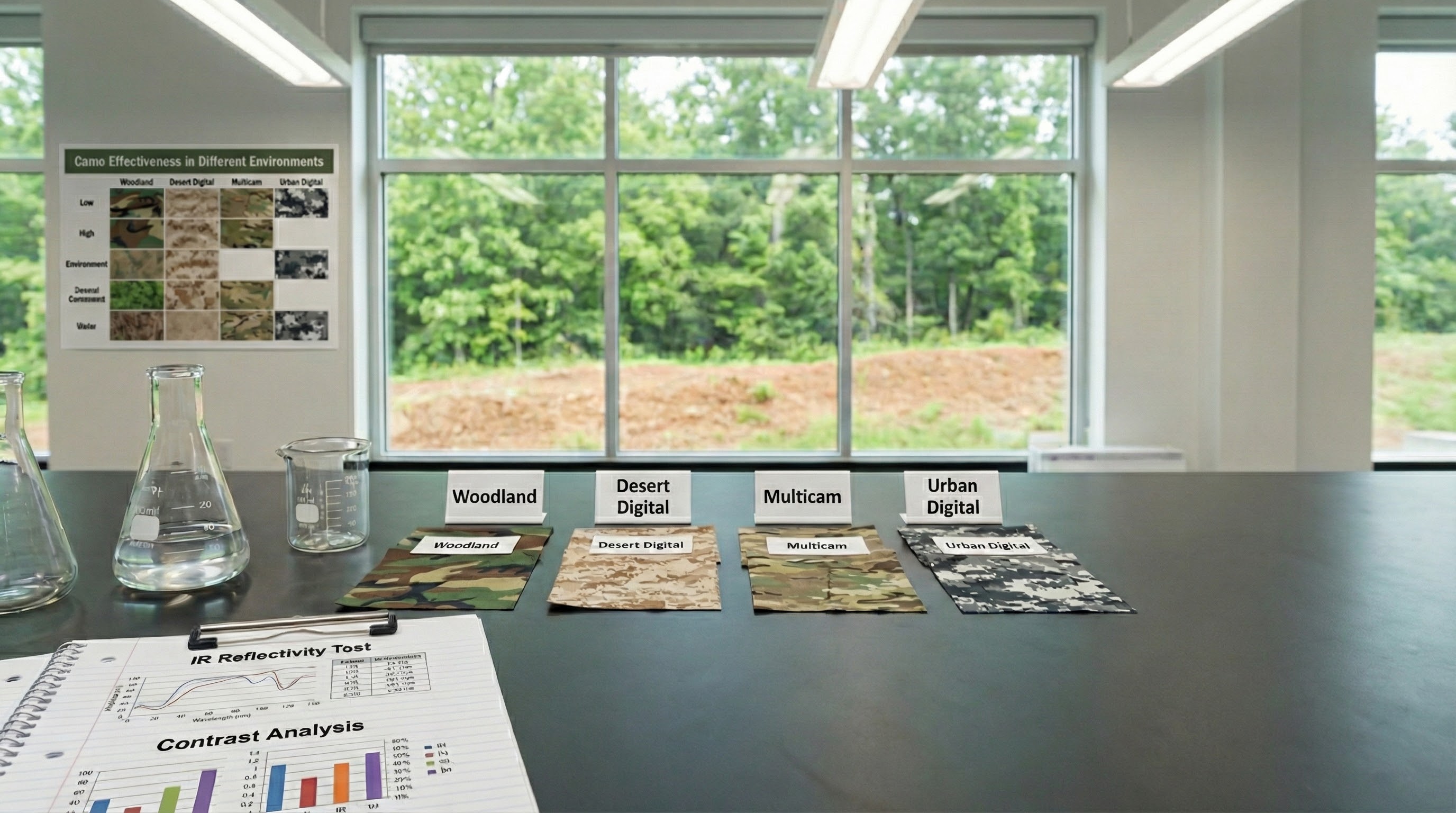
Camo Lab
Interactive Camouflage Experiments
A collection of interactive experiments, visualizations, and mini-projects exploring various aspects of military uniform design, material science, and tactical equipment.
Interactive
Experiments
Visualizations
Explore the lab
Essential Terminology
A quick reference guide to understanding military uniform nomenclature and acronyms.
Quick Reference: Uniform Cuts vs. Patterns
| Uniform Cut (The Clothes) | Standard Patterns (The Camo) |
|---|---|
| BDU (1981–2008) | M81 Woodland, DCU (3-color), DBDU (6-color) |
| ACU (2005–Present) | UCP (2005–2019), MultiCam (2010–2019), OCP (2015–Present) |
| Timeline | Term | Full Name | Type | Description |
|---|---|---|---|---|
| 1981–2008 | BDU | Battle Dress Uniform | Uniform Cut | Standard combat uniform, worn with M81 Woodland, DBDU, and DCU patterns |
| 1981–2008 | M81 | Woodland Pattern | Pattern | Classic four-color woodland camouflage, the standard BDU pattern |
| 1990–1991 | DBDU | Desert Battle Dress Uniform | Pattern | Six-color "Chocolate Chip" desert pattern worn on BDU cut, primary uniform of Gulf War |
| 1992–2005 | DCU | Desert Camouflage Uniform | Pattern | Three-color "Coffee Stain" desert pattern worn on BDU cut, used through early War on Terror |
| 2002–Present | MARPAT | Marine Pattern | Pattern | USMC digital camouflage in Woodland and Desert variants |
| 2005–Present | ACU | Army Combat Uniform | Uniform Cut | Replaced BDU in 2005, initially worn with UCP, now with OCP |
| 2005–2019 | UCP | Universal Camouflage Pattern | Pattern | Controversial gray-green digital pattern worn on ACU cut, known for poor effectiveness |
| 2010–2019 | MultiCam | MultiCam | Pattern | Commercial pattern by Crye Precision worn on ACU cut, used in Afghanistan |
| 2015–Present | OCP | Operational Camouflage Pattern | Pattern | Current Army pattern (Scorpion W2) worn on ACU cut, full transition by 2019 |